Most dog owners don’t think much about dental care—until their dog’s breath suddenly smells awful. Maybe your pup turns away from hard treats, drops food while eating, or winces when you touch their mouth. These small signs often point to a bigger issue: poor dog dental health.
Just like people, dogs need regular dental care to prevent pain, infection, and serious health problems. The good news? A few simple habits can make a huge difference.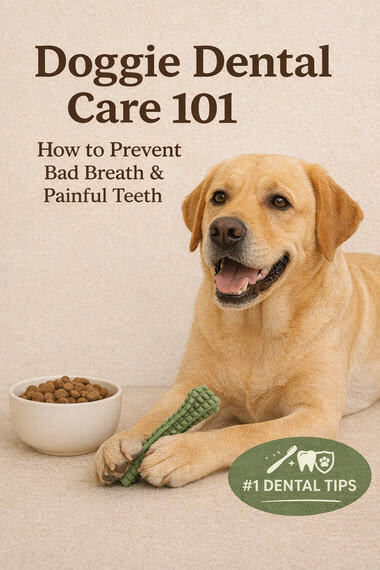
🦷 Why Dog Dental Care Matters More Than You Think
Dental disease is one of the most common health issues in dogs, particularly after the age of three. Plaque builds up, turns into tartar, and pushes bacteria under the gums. Over time, this can cause:
-
Bad breath (chronic dog breath isn’t normal)
-
Gum inflammation and bleeding
-
Painful, loose, or broken teeth
-
Infections that can affect the heart, liver, and kidneys
“I thought my dog just had ‘stinky breath.’ Turns out she had two infected teeth that needed to be pulled. I felt awful for not noticing sooner.” – Amanda, Ohio
🪥 Brushing Your Dog’s Teeth (Yes, Really)
Brushing is the gold standard for preventing dog dental disease. It sounds scary, but most dogs adjust faster than you expect.
Tips for success:
-
Use dog-safe toothpaste only (never human toothpaste)
-
Start slow—let your dog taste it first
-
Aim for brushing 3–4 times a week, or daily if possible
“I started brushing my lab’s teeth as a puppy. Now he thinks it’s treat time and sits patiently. Totally worth the effort.” – Kevin, California
🦴 Dental Chews, Toys & Water Additives
If brushing feels overwhelming, don’t worry—you still have options.
-
Dental chews can help reduce plaque through the chewing action
-
Rubber dental toys encourage healthy chewing
-
Water additives help control bacteria that cause bad breath
These tools don’t replace brushing, but they’re great backup support.
“Between work and kids, brushing daily wasn’t realistic. Dental chews made a big difference in my dog’s breath.” – Rachel, Texas
🩺 Professional Dental Cleanings
Even with great home care, many dogs still need professional dental cleanings under anesthesia. These allow vets to clean below the gumline and spot hidden issues.
Your vet may recommend cleanings:
-
Every 1–3 years, depending on breed and size
-
More often for small breeds prone to dental disease
“My vet showed me X-rays of my dog’s teeth. I had no idea how bad things were below the surface. The cleaning was a game changer.” – Tom, New York
🐕 Breeds That Need Extra Dental Care
Some dogs are more likely to develop dental problems:
-
Small breeds (Chihuahuas, Yorkies, Dachshunds)
-
Flat-faced breeds (Pugs, Bulldogs)
-
Senior dogs
If your dog falls into one of these groups, dental care is even more important.
❓FAQs: Dog Dental Care
Is bad breath normal for dogs?
No. Persistent bad breath usually means dental disease or infection.
How often should I brush my dog’s teeth?
Ideally, daily, but 3–4 times a week still helps a lot.
Are dental treats enough?
They help, but brushing and vet cleanings are still needed for full protection.
Can dental disease make my dog sick?
Yes. Bacteria from the mouth can spread to major organs if untreated.
At what age should dental care start?
As early as puppyhood. Early habits make lifelong care much easier.
🐾 Final Thoughts
Dog dental care isn’t just about fresh breath—it’s about preventing pain, infections, and serious health problems. With regular brushing, smart chew choices, and vet checkups, you can help your dog stay comfortable and healthy for years.
“Once my dog’s dental pain was gone, he acted like a puppy again. I’ll never skip dental care now.” – Lisa, Michigan
A healthy mouth means a happier dog—and fewer expensive surprises down the road.